The Ultimate Birthstone Ring Guide: A Jeweler's Advice
A birthstone ring is a piece of jewelry that features a gemstone specifically associated with the month a person was born, making it a deeply personal and meaningful accessory. These rings are not just beautiful adornments; they are storytellers, connecting the wearer to their time of birth, their personality traits, and a rich history of tradition.
At Gold Shield, we specialize in bringing these stories to life. From our workshop in Mexico, our artisans handcraft each ring, setting one-of-a-kind natural gemstones into solid gold or sterling silver. This guide is a collection of the advice we give our customers every day, helping you understand everything you need to know to choose, customize, and cherish the perfect birthstone ring.
Quick Summary
- Personal & Meaningful: Birthstone rings connect to a person's birth month, making them an ideal personalized gift for birthdays, anniversaries, or for mothers.
- Material Matters: Always choose solid precious metals like 10k, 14k, 18k gold or sterling silver (925). Our hypoallergenic metals guarantee quality and prevent skin irritation, unlike plated jewelry which can wear away.
- Customization is Key: The beauty of a birthstone ring lies in its uniqueness. Our process involves you selecting a specific natural gemstone and approving a 3D design before we handcraft your ring, ensuring it's truly yours.
- Know Your Gemstone: Durability varies greatly. A Sapphire (9 on the Mohs scale) is excellent for daily wear, while an Opal (5.5-6.5 Mohs) requires more gentle handling. We help you choose a stone that fits your lifestyle.
What exactly is a birthstone ring and what does it represent?
A birthstone ring is a ring designed to feature the specific gemstone that corresponds to an individual's birth month. This concept connects a person's identity to a particular gem, which is believed to hold special properties, luck, and significance for those born in that month. It’s one of the most personal pieces of jewelry someone can own, often given as a gift to mark a significant birthday or life event.
The Tradition of Birthstones
The idea of birthstones is ancient, with roots tracing back to the Breastplate of Aaron described in the Bible, which was a ceremonial garment set with twelve gemstones representing the twelve tribes of Israel. The historian Josephus in the 1st century AD was the first to make a connection between these twelve stones and the twelve signs of the zodiac. The modern list, however, was standardized by the National Association of Jewelers (now Jewelers of America) in 1912 to make the tradition more consistent for consumers.
For centuries, these stones have been imbued with meaning. For example, Garnet (January) was thought to protect travelers, while Amethyst (February) was believed to ward off intoxication. Whether you subscribe to these beliefs or not, the tradition adds a layer of historical and symbolic depth to the jewelry.
Modern Interpretations and Personal Meaning
Today, a birthstone ring is less about ancient powers and more about personal expression and connection. It’s a celebration of self. Wearing your birthstone is a way to carry a piece of your own story with you. We often see customers choose a birthstone ring not just for themselves, but to honor a child, a spouse, or a cherished parent, creating a 'family' ring with multiple stones.
The meaning is what you make it. For some, it’s a fashion statement—a pop of color from a vibrant Peridot or a deep blue Sapphire. For others, it’s a sentimental reminder of the person who gave it to them. The beauty of a custom birthstone ring is that it can be designed to reflect the wearer's unique style, from a minimalist solitaire to an ornate, vintage-inspired piece.
How do I choose the right birthstone for each month?
Choosing the right birthstone involves referencing the standardized list, but it also means understanding the characteristics of each gem. Many months now have both a traditional and a modern option, giving you more choices for color, durability, and price. Here in our workshop, we work with a wide array of certified natural gemstones to bring these options to life. Below is a guide to the stones we most commonly set for our clients in the USA.
- January: Garnet. A deep red stone symbolizing protection and friendship. It's quite durable, with a Mohs hardness of 6.5-7.5.
- February: Amethyst. A beautiful purple quartz associated with royalty and clarity. With a hardness of 7, it's a great choice for everyday wear.
- March: Aquamarine. Its name means 'seawater', and its serene blue-green color evokes the ocean. It's a durable stone (7.5-8 on the Mohs scale).
- April: Diamond. The classic choice, symbolizing love and strength. It is the hardest substance on Earth (10 on the Mohs scale). At Gold Shield, we also offer Moissanite as a brilliant and ethical alternative.
- May: Emerald. A vibrant green gem associated with rebirth and love. Emeralds are beautiful but more delicate (7.5-8 hardness) and often have natural inclusions, which are part of their character.
- June: Pearl or Alexandrite. Pearls are organic gems known for their classic luster, but they are very soft (2.5-4.5 Mohs) and require special care. Alexandrite is a rare, color-changing gem that is a much more durable alternative (8.5 Mohs).
- July: Ruby. The king of gems, this red corundum symbolizes passion and vitality. It's second only to diamond in hardness (9 Mohs), making it perfect for a lifetime of wear.
- August: Peridot. A unique lime-green stone, sometimes called the 'evening emerald'. It has a hardness of 6.5-7 and a joyful, sunny energy.
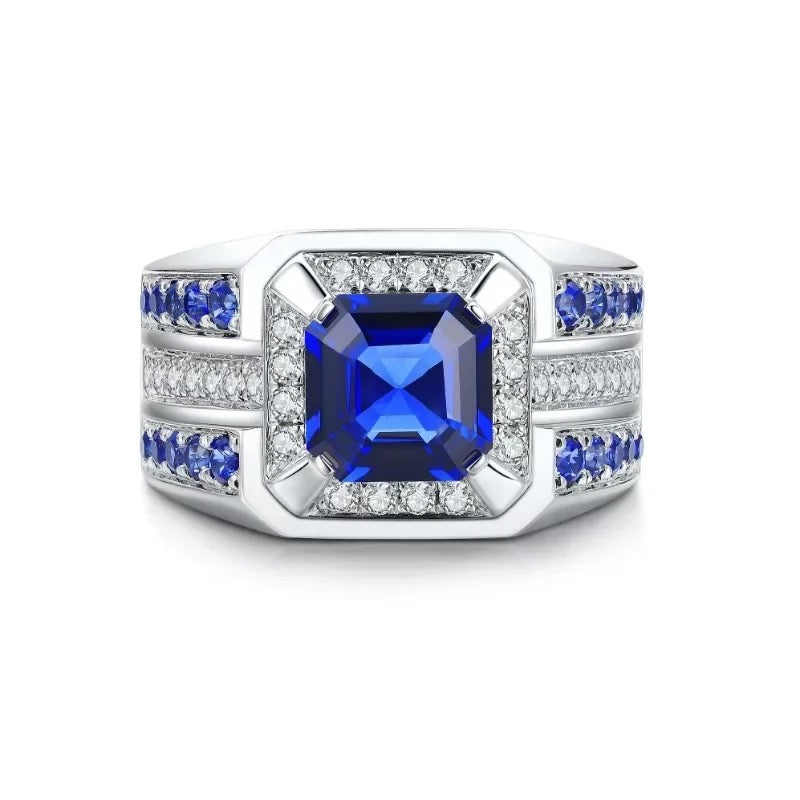
- September: Sapphire. While known for its classic blue, sapphires come in almost every color. Like ruby, it's a corundum with a hardness of 9, offering exceptional durability and endless style options.
- October: Opal or Tourmaline. Opal is famous for its mesmerizing play-of-color, but it's a soft stone (5.5-6.5 Mohs) that needs protection from impact and chemicals. Tourmaline is a wonderful, more durable alternative (7-7.5 Mohs) that comes in a rainbow of colors.
- November: Topaz or Citrine. Citrine is a sunny yellow-orange quartz, while Topaz comes in many colors, with blue and the 'imperial' golden-orange being most popular. Both are quite hard (8 for Topaz, 7 for Citrine).
- December: Tanzanite, Turquoise, or Zircon. Tanzanite is a stunning blue-violet gem found only in Tanzania (6.5-7 Mohs). Turquoise is an opaque blue-green stone with a long history, but it is softer (5-6 Mohs). Blue Zircon is a brilliant, underrated natural gem with a hardness of 6-7.5.
What materials and quality should I look for in a birthstone ring?
The materials used for your birthstone ring are just as important as the gem itself, as they determine the ring's longevity, appearance, and comfort. At Gold Shield, we are committed to using only high-quality, solid precious metals and certified gemstones because we believe a personal piece of jewelry should be made to last a lifetime. There's no place for plated metals or mystery stones in fine jewelry.
Understanding Gold Purity: 10k, 14k, and 18k
Solid gold is an excellent choice for a birthstone ring due to its beauty, value, and hypoallergenic properties. The 'k' stands for karat, which measures the purity of the gold. Pure gold (24k) is too soft for jewelry, so it's mixed with other alloys for strength.
- 10k Gold: Contains 41.7% pure gold. It's the most durable option due to its higher alloy content, making it a practical and affordable choice for a ring that will see a lot of wear.
- 14k Gold: Contains 58.5% pure gold. This is the most popular choice in the USA for fine jewelry. It offers a perfect balance of durability, rich color, and value. Most of our anillos de oro para mujer are crafted in 14k gold for this reason.
- 18k Gold: Contains 75% pure gold. It has the richest, most vibrant yellow color and is considered a luxury standard. While slightly softer than 14k, it's still durable enough for well-cared-for rings.
We guarantee the karat of every piece we make, so you know you are getting exactly what you paid for.
The Timeless Appeal of Sterling Silver 925
Sterling silver is another fantastic, hypoallergenic option. To be called sterling silver, the metal must contain at least 92.5% pure silver, which is why you'll see it stamped with '925'. The remaining 7.5% is usually copper, added for strength. Silver has a bright, cool luster that beautifully complements stones like Amethyst, Aquamarine, and Sapphire.
It's an accessible yet precious metal, perfect for creating substantial, stylish pieces. Many of our customers love the weight and feel of our handmade anillos de plata. It's a wonderful material for both everyday rings and more intricate custom designs.
Gemstone Quality: The 4Cs and Beyond
When it comes to colored gemstones, the '4Cs' (Color, Clarity, Cut, Carat) are a good starting point, but quality goes beyond that. Color is often the most important factor—you want a stone with rich, even saturation. Clarity refers to the absence of inclusions (internal flaws), but in some stones like emeralds, inclusions are expected and part of their natural character.
At Gold Shield, we source our certified natural gemstones for their individual beauty. We believe that the unique characteristics of a natural stone are what make it special. We don't deal in synthetic or imitation stones. When you choose a gem from us, you are choosing a one-of-a-kind piece of the earth, and our jewelers will custom-set it just for you.
What factors determine the price of a birthstone ring?
The price of a birthstone ring can vary dramatically, from under a hundred dollars to many thousands, and understanding what drives that cost is key to making a smart purchase. The final price is a combination of the raw materials, the craftsmanship involved, and the business model of the seller. We're proud of our transparent, factory-direct pricing, which cuts out the middlemen to give you more value.
The Gemstone Itself: Rarity, Size, and Quality
The single biggest factor in the price is usually the gemstone. Rarity is paramount. A large, high-quality Emerald or Alexandrite will be significantly more expensive than an Amethyst or Citrine of the same size because they are much rarer in nature. Within a single gem type, the 4Cs come into play. A vibrant, eye-clean Ruby will command a much higher price than a cloudy, pinkish one.
Carat weight also has a huge impact, and the price often increases exponentially, not linearly. For example, a 2-carat sapphire will cost much more than twice the price of a 1-carat sapphire of the same quality, because larger, high-quality crystals are exponentially rarer. We help you balance these factors to find a beautiful stone within your budget.
The Metal: Weight and Karat
The amount and purity of the precious metal used are the next major cost factors. An 18k gold ring will be more expensive than a 14k gold ring of the exact same design and weight, which will in turn be more expensive than a 10k gold ring. Sterling silver is the most affordable of the precious metals we use. The total weight of the ring matters—a delicate, thin band will use less metal and cost less than a thick, heavy cigar band style.
Craftsmanship: Handmade vs. Mass-Produced
Craftsmanship is a crucial component of value. A mass-produced ring, cast by the thousands overseas, will have a lower labor cost. A handmade ring, like the ones we create in our Mexican workshop, involves hours of skilled labor from an artisan. This includes hand-setting the stone, polishing the metal, and ensuring every detail is perfect. This personal attention and skill—the human element—is a significant part of what you are paying for and what makes the piece a true work of art.
How does the custom birthstone ring process work at Gold Shield?
Our custom birthstone ring process is designed to be a collaborative and transparent journey, putting you in the designer's seat alongside our experts. We've found that involving our customers at key stages ensures the final piece isn't just a ring, but a perfect reflection of their vision. This process is how we transform a raw idea into a treasured heirloom, shipped directly from our workshop in Mexico to your home in the USA.
Step 1: Choosing Your One-of-a-Kind Gemstone
It all starts with the stone. You tell us the birthstone you're interested in, your preferred shape, and your general budget. We then source a selection of certified natural gemstones for you to choose from. We can send you photos and videos of the actual stones so you can see their unique color, sparkle, and character. This is a key difference—you aren't picking a generic 'amethyst,' you are picking *your* specific amethyst.
Step 2: The 3D Design and Your Approval
Once you've selected your stone, our designers get to work. We create a detailed 3D computer-aided design (CAD) render of your ring. This is a photorealistic image that shows you exactly how the final piece will look from every angle, set in your chosen metal (10k, 14k, 18k gold or sterling silver). You can see the proportions, the setting style, and the overall aesthetic. We send this render to you for approval. If you want to make a change—a thicker band, a different prong style—we adjust the design until it's perfect. The ring is not made until you say 'yes'.
Step 3: Handmade Craftsmanship in our Mexican Workshop
With your approval, the 3D design is sent to our workshop where the magic happens. Our skilled jewelers use the design as a blueprint to bring your ring to life. They cast the ring in solid gold or silver, prepare the setting, and meticulously set your chosen gemstone by hand. This blend of modern design technology and traditional craftsmanship ensures both precision and a personal touch that can't be replicated by a machine.
Step 4: Engraving and Final Touches
Before shipping, we complete any final touches. This is when we can add custom name or date engravings inside the band, a popular request for gifts. The ring is given a final polish and a thorough quality inspection to ensure it meets our high standards. It's then securely packaged for insured shipping to your address in the United States, ready to be worn and cherished.
How can I care for my birthstone ring to make it last a lifetime?
Proper care and maintenance are essential to keeping your handmade birthstone ring beautiful and secure for years to come. While solid gold and sterling silver are durable, the gemstones themselves have varying levels of hardness and require different levels of attention. As jewelers, we always advise our customers that a ring is not indestructible, but with a little mindfulness, it can be a lifelong companion.
General Cleaning and Maintenance Tips
For most birthstone rings with durable stones (like Sapphire, Ruby, Diamond, Amethyst, Aquamarine), cleaning is simple. Create a solution of warm water and a few drops of mild dish soap. Let the ring soak for 20-30 minutes to loosen any dirt, lotion, or oils. Then, use a very soft toothbrush to gently scrub behind the stone and around the setting. Rinse it thoroughly under clean water and pat dry with a soft, lint-free cloth.
Special Care for Delicate Stones (Opal, Pearl, Emerald)
Softer or more porous stones require a gentler approach. Never use an ultrasonic cleaner or harsh chemicals on Opals, Pearls, Emeralds, or Turquoise. For these stones, it's best to simply wipe them with a damp, soft cloth. Pearls, being organic, are particularly susceptible to damage from chemicals in perfume and hairspray, so they should always be the last thing you put on and the first thing you take off. Emeralds often have natural fractures that can be filled with oil, so harsh cleaning can damage their appearance.
When to Take Your Ring Off
This is the most important rule of jewelry care. To prevent damage to both the stone and the setting, you should always remove your birthstone ring before:
- Exercising, especially lifting weights or activities where you grip something tightly.
- Swimming in a pool or hot tub (chlorine is harsh on metals and gems).
- Cleaning with household chemicals like bleach.
- Gardening or doing any heavy manual labor.
- Applying lotions, perfumes, or hairspray.
How do different types of birthstone rings compare?
When you decide on a custom birthstone ring, you have a world of design choices available. The style you select can dramatically change the look, feel, and statement the ring makes. From the setting style to the metal choice, understanding these comparisons will help you design a piece that truly reflects your personal taste. We guide our customers through these choices every day to find the perfect balance for their lifestyle and aesthetic.
Solitaire vs. Multi-stone vs. Stacking Rings
A solitaire ring features a single, prominent gemstone and is the most classic and timeless choice. It puts all the focus on the beauty of the birthstone. A multi-stone ring can incorporate more than one birthstone, making it a perfect choice for a mother's ring or a family ring, representing children or loved ones. These can also include accent stones like diamonds or moissanite to add extra sparkle. Stacking rings are smaller, more delicate bands, often with a tiny birthstone, designed to be worn together in a set. This allows you to mix and match metals and stones, and add to your collection over time.
Metal Comparison: Gold vs. Sterling Silver
Both solid gold and sterling silver are excellent, high-quality choices for a birthstone ring. The best one for you depends on your budget, style preference, and how you plan to wear the ring. Here's a direct comparison based on what we work with in our shop:
| Feature | Solid Gold (10k, 14k, 18k) | Sterling Silver (925) |
|---|---|---|
| Purity | 10k (41.7%), 14k (58.5%), 18k (75% pure gold) | 92.5% pure silver |
| Color Options | Yellow, White, Rose | Bright, cool white |
| Durability & Hardness | Excellent. Highly resistant to tarnish, rust, and corrosion. Hardness varies by karat. | Very good, but softer than gold. More prone to scratching and will tarnish over time (easily polished). |
| Hypoallergenic | Yes, for the vast majority of people. Nickel is rarely used in modern quality gold alloys. | Yes, pure silver is hypoallergenic. Sterling silver is safe for almost everyone. |
| Price Point | Higher initial investment, holds value well. | More accessible, excellent value for a precious metal. |
| Best For | Lifelong pieces, engagement rings, milestone gifts, daily wear. | Fashion-forward designs, larger statement pieces, gifts, daily wear with regular polishing. Explore our anillos de plata para mujer for inspiration. |
Natural Gemstones vs. Moissanite for April's "Birthstone"
For those born in April, diamond is the traditional birthstone. While we can and do source natural diamonds, we also offer moissanite as a stunning alternative. Moissanite is a lab-created gemstone known for its exceptional brilliance and fire. With a hardness of 9.25 on the Mohs scale, according to the Gemological Institute of America (GIA), it is incredibly durable and suitable for everyday wear. It offers a visually similar, ethical, and more affordable option compared to a natural diamond of the same size and quality.
What are the most common mistakes to avoid when buying a birthstone ring?
Buying a piece of fine jewelry is an investment in both money and emotion, and we want to help you get it right. Over the years, we’ve seen customers come to us after making a few common mistakes elsewhere. Avoiding these pitfalls can be the difference between acquiring a lifelong treasure and facing disappointment down the road.
Mistake 1: Not understanding metal quality (plated vs. solid)
This is the biggest mistake we see. Terms like 'gold-plated,' 'gold-filled,' or 'gold vermeil' sound nice, but they all mean there is a thin layer of gold over a base metal like brass or copper. This layer will inevitably wear off, especially on a high-contact item like a ring. The base metal can be exposed, causing discoloration and potentially skin irritation. Always look for 'Solid 10k/14k/18k Gold' or 'Sterling Silver 925' to ensure your ring is made of precious metal through and through.
Mistake 2: Ignoring gemstone hardness and durability
Falling in love with a beautiful but delicate stone like an Opal for an everyday-wear ring can lead to heartbreak. It's crucial to match the gemstone's durability (its Mohs hardness) to the wearer's lifestyle. If you're active with your hands, a Sapphire or Ruby (Mohs 9) is a much safer bet than a piece of Turquoise (Mohs 5-6). We always discuss this with our clients to ensure they choose a stone that will stand up to their life, or help them design a more protective setting if they have their heart set on a softer gem.
Mistake 3: Overlooking the customization process
Buying a birthstone ring 'off the shelf' means you get no say in the specific stone or the fine details of the design. The beauty of a personal item like this is in its uniqueness. A true custom process, like our 3D render approval, allows you to co-design the piece. This ensures the final ring is perfectly proportioned and exactly as you envisioned. Don't settle for a generic product when you can create a one-of-a-kind piece for a similar price with a direct-to-consumer workshop like ours.
Mistake 4: Not checking for authenticity and guarantees
When you buy fine jewelry, you should have confidence in what you're getting. Ask the seller if they guarantee the metal's karat and if their gemstones are certified or verifiably natural. Look for real reviews and transparent policies. At Gold Shield, we stamp every piece with its karat mark (10k, 14k, 18k, or 925) and provide certification for our gemstones. This is our promise of quality and authenticity to you.
Frequently Asked Questions About Birthstone Rings
What finger should I wear a birthstone ring on?
There is no strict rule for which finger to wear a birthstone ring on, so you should wear it on whichever finger is most comfortable and meaningful to you. Traditionally, rings of personal significance are often worn on the ring finger of the right hand to differentiate them from a wedding or engagement ring. However, we see customers wear them on their index finger as a statement piece, or even their pinky. It's entirely a matter of personal style.
What is a mother's birthstone ring?
A mother's birthstone ring is a special piece of jewelry designed to represent her family. It typically features the birthstones of her children, and sometimes includes the parents' birthstones as well. These can be designed in many ways, from a single band with multiple stones set into it, to a stack of individual rings, each with one child's birthstone. It’s a beautiful, sentimental way for a mother to keep a symbol of her loved ones with her always.
Should I get a birthstone ring or a necklace?
The choice between a ring and a necklace depends on personal preference and lifestyle. Rings are worn on the hands and are always in your line of sight, making them a very personal and constant reminder. However, they are also subject to more wear and tear. Necklaces are generally safer from impact and chemicals, making them a better choice for softer stones like Pearl or Opal. A necklace also allows for more complex designs with multiple dangling stones. We often suggest that if the wearer has a very active job or hobbies, a necklace might be a more practical choice.
What is the birthstone for [Month]?
- January Birthstone Ring: Features Garnet, a deep red gem symbolizing trust and friendship.
- February Birthstone Ring: Features Amethyst, a vibrant purple stone associated with wisdom and sobriety.
- March Birthstone Ring: Features Aquamarine, a tranquil light blue gem reminiscent of the sea.
- April Birthstone Ring: Traditionally features a Diamond. We also use Moissanite for a brilliant, durable, and ethical alternative.
- May Birthstone Ring: Features Emerald, a rich green gem symbolizing love and rebirth.
- June Birthstone Ring: Can feature Pearl, Alexandrite, or Moonstone. We recommend Alexandrite for a durable ring.
- July Birthstone Ring: Features the 'king of gems', the Ruby, a passionate red stone of vitality.
- August Birthstone Ring: Features Peridot, a unique and bright lime-green gem.
- September Birthstone Ring: Features Sapphire, which comes in many colors but is most famous for its deep blue.
- October Birthstone Ring: Can feature Opal or Tourmaline. We often recommend the more durable Tourmaline for rings.
- November Birthstone Ring: Features either sunny Citrine or versatile Topaz.
- December Birthstone Ring: Has several options, including Tanzanite, Zircon, and Turquoise.
Ready to create a birthstone ring that tells your story? At Gold Shield, every piece is handmade with passion in our Mexican workshop and shipped with care to the USA. We use only solid gold, sterling silver, and one-of-a-kind natural gemstones to build your dream ring.
Let's start the conversation. Contact us directly on WhatsApp for a no-obligation quote and to see our current selection of beautiful, certified gemstones. We can't wait to make something special for you.
Contact us on WhatsApp: +1 845 622 6479