Moissanite vs. Diamond: An Expert Jeweler's Guide
Moissanite is a lab-created gemstone known for its exceptional, fiery brilliance, while a diamond is a natural mineral famous for its iconic sparkle and unparalleled hardness. The primary differences between them come down to their origin, chemical composition, light performance, and, most notably, their price point. While a diamond is pure carbon, moissanite is silicon carbide, a compound so rare in nature that all moissanite used in jewelry today is carefully grown in a lab.
Quick Summary: Moissanite vs. Diamond
- Brilliance & Fire: Moissanite has a higher refractive index (2.65–2.69) than a diamond (2.42). This means it bends light more, creating a more intense, rainbow-like sparkle (fire) that many of our customers love. Diamonds offer a more balanced, classic sparkle with a mix of white light (brilliance) and colored light (fire).
- Durability: A diamond is the hardest known natural substance, scoring a perfect 10 on the Mohs scale of hardness. Moissanite is incredibly close behind at 9.25, making it the second-hardest gemstone used in jewelry. This makes both exceptionally durable and suitable for everyday wear in pieces like engagement rings.
- Price & Value: This is the biggest differentiator. A high-quality moissanite can cost up to 80-90% less than a natural diamond of a similar carat weight and clarity. This allows you to get a much larger, eye-clean stone for your budget without compromising on durability or sparkle.
- Origin & Ethics: All moissanite you'll find in our workshop is lab-created, ensuring a conflict-free and environmentally conscious origin. While natural diamonds are mined from the earth, lab-grown diamonds and moissanite offer an alternative that appeals to many for ethical and sustainability reasons.
What Exactly Are Moissanite and Diamonds?
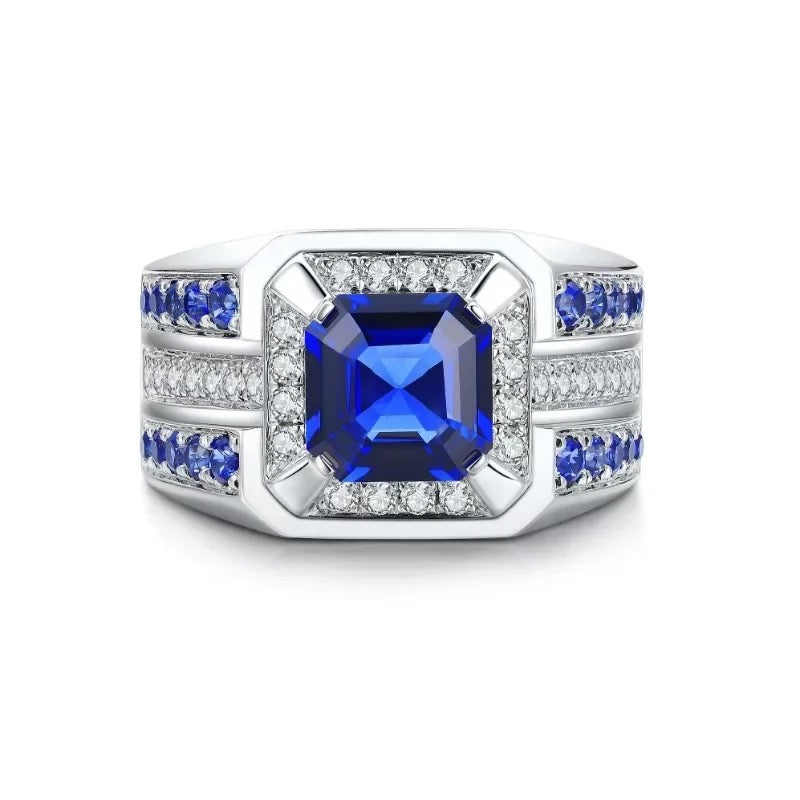
Understanding the fundamental nature of these two stones is the first step in making an informed choice. Moissanite is silicon carbide (SiC), a compound first discovered in 1893 by French scientist Henri Moissan in a meteor crater in Arizona. He initially mistook the sparkling crystals for diamonds. Natural moissanite is astronomically rare, so every moissanite gem you see in jewelry, including the ones we set in our Moissanite Rings, is a masterpiece of science, meticulously grown in a controlled laboratory environment.
A diamond, on the other hand, is a mineral composed of pure carbon atoms arranged in a crystal lattice. Formed over billions of years under immense heat and pressure deep within the Earth's mantle, these gems are brought to the surface through volcanic eruptions. Their journey from the earth to a piece of jewelry is what contributes to their rarity and traditional value. While they are chemically identical, we also now have lab-grown diamonds, which are created by replicating the earth's process in a lab.
At our workshop in Mexico, we work with both. We source beautiful, certified natural gemstones and high-grade moissanite. The choice between them isn't about which is "better" but which is better for you. It's a conversation about values, aesthetics, and budget, and we're here to guide you through it. We believe the story and craftsmanship behind the piece are just as important as the stone itself.
How Do Moissanite and Diamond Compare in Appearance?
The visual properties of a gemstone are what truly capture the heart, and this is where moissanite and diamond show their distinct personalities. While they can look very similar to the untrained eye, their interaction with light is different. A jeweler can spot the difference, but most people you meet won't know unless you tell them.
Brilliance, Fire, and Scintillation
These three terms describe how a gem sparkles. Brilliance is the return of white light, Fire is the dispersion of light into a rainbow of colors, and Scintillation is the play of light and dark as the stone moves. A diamond is known for its powerful brilliance, a bright white sparkle that is truly iconic. It has a high refractive index of 2.42, which is excellent.
Moissanite, however, takes fire to another level. With a refractive index of 2.65 to 2.69, it's even more brilliant than a diamond and possesses what's called "double refraction." This property causes it to break light into two separate rays, amplifying its fire and creating a dazzling, disco-ball effect of rainbow colors. Some people adore this fiery passion, while others prefer the more subtle, classic sparkle of a diamond. There is no right or wrong answer; it's purely a matter of personal taste.
Color and Clarity
Like diamonds, moissanite is graded on color and clarity. Modern, high-quality moissanites (like the ones we use at Gold Shield) are typically in the "colorless" (D-E-F) or "near-colorless" (G-H-I) range, making them indistinguishable from high-grade diamonds in terms of color. Older, less advanced moissanite could sometimes have a slight yellow or greenish tint, but that's no longer an issue with premium stones.
Clarity refers to the absence of internal inclusions or external blemishes. Since moissanite is created in a lab, the process is controlled to produce gems that are almost always eye-clean, often equivalent to a VS (Very Slightly Included) clarity grade or better in the diamond world. This means you get a visually flawless stone without the premium price that a flawless natural diamond would command.
Which is More Durable for Everyday Wear?
Durability is a critical factor for any piece of jewelry you plan to wear daily, especially an engagement ring. The durability of a gemstone is measured in two ways: hardness and toughness. Hardness refers to a stone's resistance to scratching, while toughness is its resistance to chipping or breaking.
On the Mohs scale of hardness, which runs from 1 (talc) to 10 (diamond), a diamond is the undisputed champion. As the hardest known material on Earth, a diamond can only be scratched by another diamond. This exceptional hardness is what makes it so perfect for a lifetime of wear, resisting the scuffs and scratches of daily life. According to the Gemological Institute of America (GIA), this scale is a cornerstone of gem identification.
Moissanite, with a score of 9.25 on the Mohs scale, is the second-hardest material commonly used in jewelry. It is harder than sapphire, ruby (both 9), and any other diamond alternative. This means it is exceptionally resistant to scratching and is more than durable enough for an engagement ring or any other piece of fine jewelry. You can wear a moissanite piece from Gold Shield with confidence, knowing it's built to last a lifetime.
In terms of toughness, both diamonds and moissanite are incredibly tough, but like any gemstone, they can chip if struck with enough force at just the right angle. This is why the setting is so important. A secure bezel or prong setting, crafted by our expert jewelers from solid 10k, 14k, or 18k gold, provides crucial protection for the stone, ensuring your cherished piece remains safe and beautiful for years to come.
What Factors Determine the Price of Moissanite vs. Diamond?
The price difference between moissanite and diamond is perhaps the most significant factor for many buyers. A natural diamond's price is driven by the famous "4 Cs" (Cut, Color, Clarity, Carat) but also by its rarity and the immense costs associated with mining, cutting, and distributing it through a long supply chain. Each step adds a markup, culminating in the final retail price.
Moissanite, being lab-grown, has a much more streamlined and predictable supply chain. The cost is determined by the technology and energy required for its creation, the quality of the rough crystal, and the skill of the cutter. Because it is not a mined resource with finite supply, its price is not subject to the same market volatility as diamonds. The result is a stunning gemstone that can be up to 90% less expensive than a natural diamond of comparable size and visual quality.
At Gold Shield, we leverage this advantage to offer incredible value. By operating with a factory-direct model from our workshop in Mexico, we eliminate multiple layers of middlemen. This means we can provide transparent, fair pricing on our handmade pieces, whether you choose moissanite, a natural gemstone, or a diamond. You are paying for the quality of the material (we guarantee our gold karats: 10k is 41.7% gold, 14k is 58.5%, and 18k is 75%) and the skill of our artisans, not for a brand name or a retail markup.
This price difference allows for amazing flexibility. You could choose a much larger 2 or 3-carat moissanite for the price of a modest 0.5-carat diamond. Or, you could stick with your desired stone size and invest the savings into a more intricate setting, a heavier gold band, or a matching wedding band. The choice and the value are in your hands.
| Feature | Moissanite | Natural Diamond | Lab-Grown Diamond | Cubic Zirconia (CZ) |
|---|---|---|---|---|
| Composition | Silicon Carbide (SiC) | Carbon | Carbon | Zirconium Dioxide |
| Mohs Hardness | 9.25 | 10 | 10 | 8 - 8.5 |
| Brilliance (RI) | 2.65 - 2.69 (Highest) | 2.42 (High) | 2.42 (High) | 2.15 - 2.18 (Moderate) |
| Origin | Lab-Created | Mined from Earth | Lab-Created | Lab-Created |
| Price (Relative) | $$ | $$$$$ | $$$ | $ |
| Best For | Maximum sparkle & value, everyday wear | Tradition, investment, classic sparkle | Authentic diamond properties, better value | Fashion jewelry, testing a style |
How Can I Tell the Difference Between Moissanite and a Diamond?
This is one of the most common questions our customers ask. While it takes a trained eye or specific tools to be certain, there are a few characteristics you can look for. The most noticeable visual cue is the type of sparkle. In good lighting, gently rock the stone back and forth. A diamond will primarily flash with brilliant white light, while a moissanite will throw off vibrant, fiery rainbow flashes. This is due to moissanite's higher dispersion and double refraction.
Weight is another subtle clue. Moissanite is about 15% less dense than a diamond. This means that if you have a moissanite and a diamond of the exact same millimeter dimensions, the moissanite will weigh slightly less. This isn't something you can feel by hand, but it's a measurable difference for a jeweler.
For a definitive answer, jewelers use specialized tools. The most common is a thermal conductivity tester. Diamonds are extremely effective heat conductors, while moissanite is not. A basic diamond tester will correctly identify a diamond but may be fooled by moissanite, showing it as a diamond. That's why professional jewelers use more advanced testers that are specifically designed to distinguish moissanite from diamond by checking for electrical conductivity, a property moissanite has but diamonds do not. When you buy from a reputable source like Gold Shield, you can be confident you are getting exactly what you paid for, with all materials clearly identified.
Why Would Someone Choose Moissanite Over a Diamond?
The decision to choose a moissanite is a personal one, driven by a combination of practicality, ethics, and aesthetics. For many, the primary reason is value. You can get a significantly larger and more visually flawless stone for a fraction of the cost of a diamond. This means you don't have to compromise on the size or sparkle you've been dreaming of to stay within your budget. It frees up funds for a more elaborate custom setting or even for the wedding and honeymoon.
Ethical and environmental considerations are also a huge factor in 2026. Because moissanite is created in a lab, it has a much smaller environmental footprint than traditional diamond mining. There are no concerns about conflict gems or exploitative labor practices. For many couples, starting their life together with a symbol that aligns with their values of sustainability and social responsibility is paramount.
Finally, there's the look itself. Some people are simply captivated by moissanite's intense fire. They love the vibrant, rainbow sparkle and find it more exciting and eye-catching than the more traditional look of a diamond. It's not about trying to pass it off as a diamond; it's about choosing a gemstone that you find genuinely beautiful and that speaks to your personal style. It’s a stone that stands on its own merit, celebrated for its unique and brilliant properties.
How Does Gold Shield Create a Custom Moissanite Ring?
This is where our passion truly shines. Creating a custom piece of jewelry is an intimate and collaborative journey, and we've refined our process to be seamless and exciting for our customers in the USA. It all starts with a simple conversation. You reach out to us on WhatsApp at +1 845 622 6479 with your ideas—maybe a photo you love, a sketch, or just a description of your dream ring.
Our design team then gets to work, translating your vision into a professional 3D CAD (Computer-Aided Design) render. This is a crucial step. We send you realistic images of your ring from every angle so you can see exactly how it will look. Want the prongs a little thinner? The band a bit wider? We make adjustments until the design is absolutely perfect. You approve the final render before we ever touch a piece of metal. This guarantees there are no surprises and that you will love the final product.
Once you've approved the design, you'll choose your precious metal. We work with solid 10k, 14k, and 18k gold (in yellow, white, or rose) and sterling silver (925). Our jewelers then bring the 3D design to life in our workshop here in Mexico. They cast the ring, meticulously hand-set the moissanite or other chosen gemstones, and polish it to a brilliant shine. We can also add personal touches like name or date engraving. The entire piece is made to order, just for you. Finally, we package it securely and ship it with full insurance to your doorstep in the USA.
How Should I Care for My Moissanite and Diamond Jewelry?
Great news: caring for moissanite is just as easy as caring for a diamond. Both stones are very hard and resistant to chemicals and dirt, but they can get smudged by oils from your skin, lotions, and everyday life, which dulls their sparkle. A simple cleaning routine will keep them looking as brilliant as the day you received them.
The best way to clean your moissanite or diamond jewelry at home is with a soft toothbrush and a solution of warm water and a few drops of mild dish soap. Gently scrub the stone and setting, especially the underside where buildup can accumulate, and then rinse it thoroughly with clean water. Pat it dry with a lint-free cloth. For a deeper clean, you can use an ultrasonic cleaner, but we advise checking with us first to ensure your specific setting is suitable for it.
It’s also wise to practice some preventative care. We recommend removing your rings when doing heavy-duty activities like gardening, working out, or cleaning with harsh chemicals. While the stones are tough, the metal can be scratched, and a hard impact could potentially damage the setting. Store your jewelry in a fabric-lined box or a separate pouch to prevent it from scratching other pieces. With just a little bit of care, your Gold Shield piece will sparkle for a lifetime.
Frequently Asked Questions (FAQ)
How to tell moissanite vs diamond?
The easiest way for a non-expert is to look for the sparkle. Diamonds produce a balanced mix of white light (brilliance) and rainbow flashes (fire). Moissanite has more fire, so you'll see more intense, colorful rainbow flashes, especially in direct light. Jewelers use a thermal tester for a definitive answer.
How to spot moissanite vs diamond?
Besides observing the fiery, rainbow sparkle of moissanite, you can sometimes notice its double refraction. Look at the stone from an angle through one of the crown facets. In a moissanite, you might see the back facets appear doubled or slightly blurry, a phenomenon you won't see in a singly refractive diamond.
How to test moissanite vs diamond?
A professional jeweler will use a specialized moissanite tester that checks for electrical conductivity, which moissanite has and diamonds do not. A standard diamond tester that only checks for thermal conductivity can be fooled by moissanite. At home, you cannot perform a definitive test without these tools.
What is moissanite diamond vs moissanite?
The term "moissanite diamond" is a misnomer and often used incorrectly for marketing. They are two completely different things. Moissanite is a gemstone made of silicon carbide. A diamond is made of carbon. There is no such thing as a "moissanite diamond"; a stone is either a moissanite or a diamond.
What is moissanite diamond vs lab grown diamond?
Again, "moissanite diamond" is an incorrect term. The real comparison is moissanite vs. a lab-grown diamond. A lab-grown diamond is physically, chemically, and optically identical to a mined diamond—it's pure carbon. Moissanite is silicon carbide. Both are lab-created, but they are fundamentally different materials with different visual properties.
Why moissanite vs diamond?
People choose moissanite for three main reasons: value (it's significantly less expensive for a larger stone), ethics (it's lab-grown and conflict-free), and aesthetics (they prefer its intense, fiery sparkle). It offers a durable, beautiful, and affordable alternative to a traditional diamond.
Can you tell moissanite vs diamond?
An expert or a jeweler with the right tools certainly can. For the average person, it is very difficult to tell the difference just by looking, especially with modern, high-quality colorless moissanite. Without a side-by-side comparison, most people would assume a moissanite is a diamond.
Moissanite vs diamond how to tell difference?
The key visual difference is the "fire." Hold the stone under a light source and move it. If you see an explosion of rainbow colors, it's likely moissanite. If the sparkle is predominantly bright white with some colored flashes, it's more characteristic of a diamond.
What is moissanite diamond vs lab grown?
This question likely means "What is moissanite vs. a lab-grown diamond?" A lab-grown diamond is a real diamond, just made in a lab. Moissanite is a different gemstone entirely (silicon carbide). A lab diamond will test as a diamond and has the same properties, while moissanite has its own unique properties, like higher brilliance and double refraction.
What is moissanite diamond vs diamond?
This is another phrasing of the same common confusion. There is no "moissanite diamond." There is moissanite (silicon carbide) and diamond (carbon). They are separate and distinct gemstones.
What is moissanite vs diamond?
Moissanite is a lab-created silicon carbide gemstone known for its exceptional fire and affordability. A diamond is a natural carbon mineral known for its hardness and traditional value. Moissanite is a diamond simulant, but a very high-quality one that stands as a gemstone in its own right.
Moissanite vs diamond vs cz?
Moissanite (9.25 hardness) is far superior to Cubic Zirconia (CZ) (8-8.5 hardness). CZ is less durable, scratches easily, and can become cloudy over time. It also has less fire and brilliance than moissanite. While CZ is very inexpensive and great for our fashion Joyeria con Zirconia, moissanite is a true fine jewelry gemstone suitable for a lifetime of wear, just like a diamond.
Moissanite vs diamond vs lab diamond?
These are three top choices. Natural Diamond is the traditional, mined option. A Lab Diamond is a real diamond made in a lab, more affordable than natural. Moissanite is a different, lab-created gemstone that is the most affordable of the three, offering the most sparkle for the price.
Moissanite vs diamond vs white sapphire?
White sapphire is a natural gemstone (a 9 on the Mohs scale). However, it has much lower brilliance and fire than a diamond or moissanite. It can appear somewhat flat or glassy in comparison. Moissanite provides a much more convincing and brilliant diamond-like sparkle than white sapphire does.
Moissanite vs lab diamond vs cubic zirconia?
This is a ranking of quality and price. Lab Diamond is top-tier (a real diamond). Moissanite is the excellent, high-value alternative (durable, brilliant). Cubic Zirconia is the budget-friendly option for fashion jewelry, but not recommended for a forever piece like an engagement ring due to its lower durability and tendency to cloud.
Ready to create a piece of jewelry that tells your unique story? Whether you're drawn to the fiery brilliance of a moissanite, the timeless tradition of a diamond, or the unique beauty of a natural gemstone, our artisans at Gold Shield are here to bring your vision to life. All our pieces are handmade in Mexico with guaranteed solid gold or sterling silver and shipped with insurance to the USA.
Contact us today on WhatsApp at +1 845 622 6479 for a free, no-obligation quote and to start designing your dream jewelry.