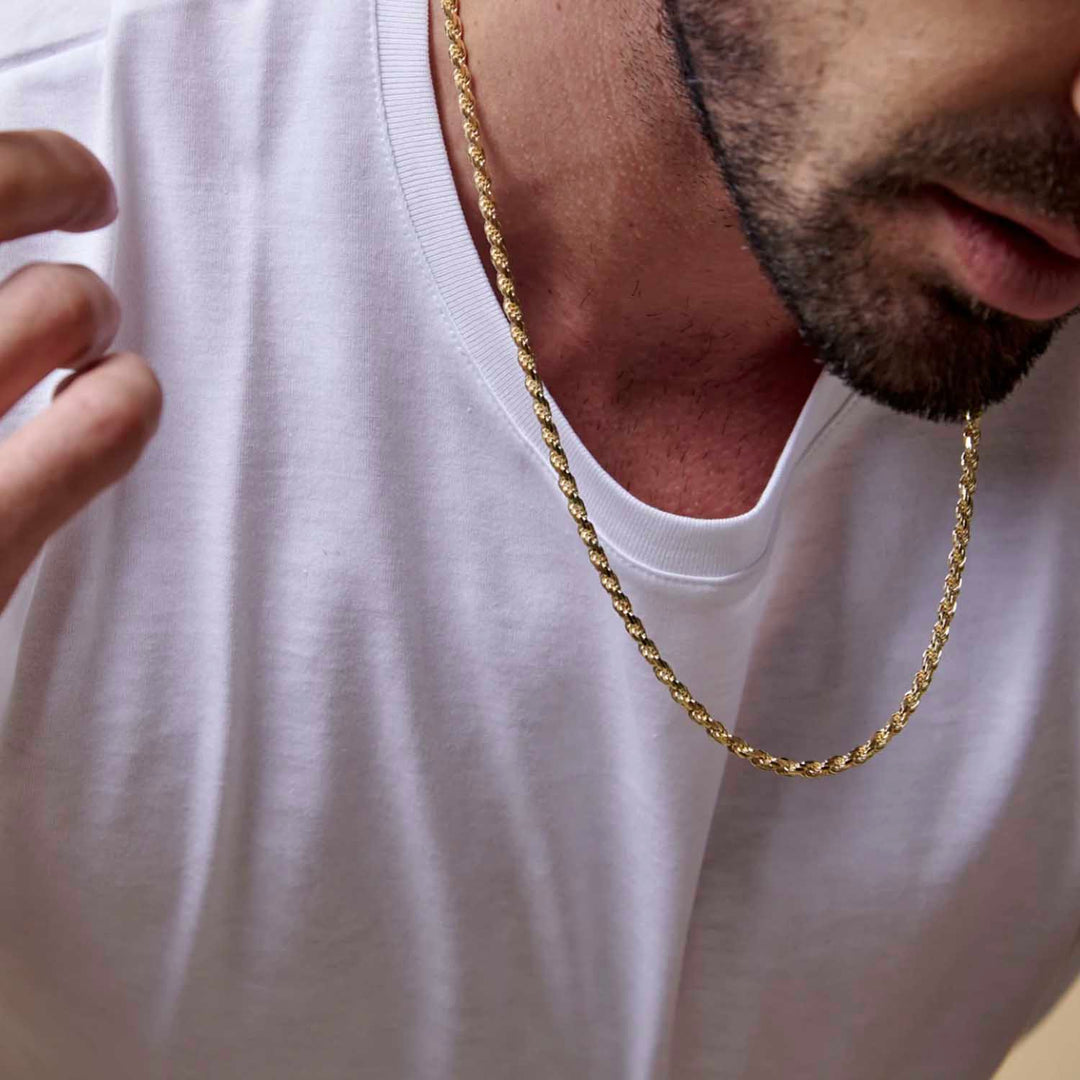
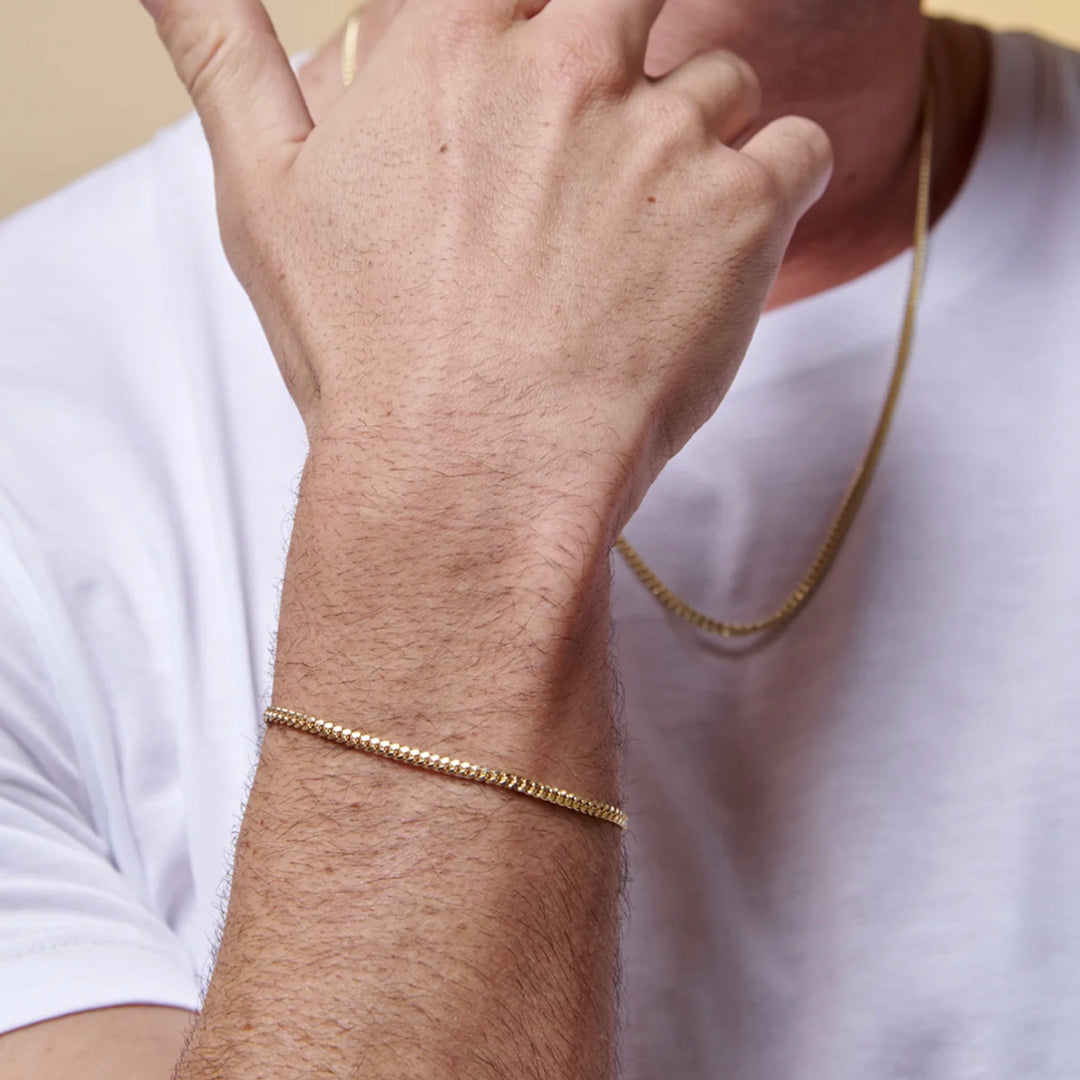
Solid Gold vs. Gold Plated Jewelry: A Complete Guide
Solid gold jewelry is made from a gold alloy through and through, while gold-plated jewelry has only a thin layer of gold electrochemically bonded to a base metal like brass or copper. The fundamental difference lies in value, durability, and longevity; solid gold is a lifetime investment that retains its worth, whereas gold plating is a temporary finish that will eventually wear off.
Quick Summary: Gold vs. Gold Plated
- Value & Longevity: Solid gold is an investment. It has significant intrinsic value based on its purity (karat) and will last for generations without fading. Gold-plated jewelry has minimal gold content and a lifespan of 1-2 years with careful use before the base metal is exposed.
- Composition: Solid gold is an alloy of pure gold and other metals. For example, 14k gold is 58.5% pure gold. Gold-plated jewelry is a non-gold base metal (like copper or brass) with a microscopic layer of gold, typically 0.5 to 2.5 microns thick, applied to its surface.
- Cost: The price difference is substantial. A solid 14k gold chain costs hundreds or thousands of dollars due to its gold content and craftsmanship. A similar-looking gold-plated chain might cost $20-$100, reflecting the low cost of the base metal and minimal gold used.
- Hypoallergenic Properties: Solid 10k, 14k, and 18k gold, along with sterling silver, are generally hypoallergenic and safe for sensitive skin. Gold-plated jewelry can cause skin reactions as the plating wears away, exposing base metals like nickel or copper.
What Exactly Is the Difference Between Solid Gold and Gold Plated?
The core difference between solid gold and gold-plated jewelry is what lies beneath the surface. Solid gold jewelry is crafted from a consistent alloy of gold and other metals from its core to its exterior, meaning the piece is gold through and through. This is why it can be polished, repaired, and worn for a lifetime without ever changing color or revealing a different metal underneath. The purity of this alloy is measured in karats, a system that denotes the ratio of pure gold to other metals.
Gold-plated jewelry, on the other hand, is a composite material. It starts with a core of a less expensive metal, most commonly brass, copper, or sometimes sterling silver. A very thin layer of real gold is then applied to the outside of this base metal using a process called electroplating. This layer is microscopic, often less than 1 micron thick (a micron is one-thousandth of a millimeter). While it looks like gold initially, this layer is fragile and will inevitably wear away with friction, exposure to chemicals, and even the natural oils on your skin.
Think of it like this: a solid gold piece is like a statue carved from a single block of marble, while a gold-plated piece is like a plaster statue painted to look like marble. One is inherently valuable and enduring; the other is an aesthetic imitation with a limited lifespan. At our workshop in Mexico, we specialize in solid gold and sterling silver because we believe in creating heirloom pieces that carry both monetary and sentimental value for generations.
How Are Different Types of Gold Jewelry Made?
The creation process for solid gold and plated jewelry are worlds apart, reflecting the vast difference in their quality and purpose. Solid gold jewelry making is an ancient art of metallurgy and craftsmanship, while plating is a modern industrial process focused on creating an affordable, temporary look. Understanding these methods helps clarify why one is a lasting treasure and the other a fleeting trend.
H3: The Art of Solid Gold: Alloying and Crafting
Creating a solid gold piece begins with the alloy. Pure 24k gold is too soft for most jewelry applications, so we mix it with other metals like silver, copper, and zinc to increase its strength and durability. This mixture determines the karat and color. For 14k yellow gold (58.5% pure gold), we add specific ratios of copper and silver to achieve that classic warm hue. For 18k rose gold (75% pure gold), a higher percentage of copper is used. This molten gold alloy is then cast, rolled, or hand-forged into the desired shape—be it a ring band, a chain link, or a bezel for a gemstone.
Our jewelers in Mexico then meticulously work the metal. They file, solder, and polish each component by hand, a labor-intensive process that ensures every curve is perfect and every connection is secure. When setting a one-of-a-kind natural gemstone, this precision is paramount. The result is a seamless piece of precious metal, valued for both its material content and the hours of skilled labor invested in it. This is true artisanship.
H3: The Science of Gold Plating and Its Variations
Gold plating uses a process called electroplating. The base metal piece (e.g., a brass ring) is thoroughly cleaned and then submerged in a chemical solution containing dissolved gold ions. An electric current is passed through the solution, causing the gold ions to adhere to the surface of the base metal, forming a thin, shiny layer. The thickness of this layer is minimal, often just 0.5 microns. It's a fast, efficient process perfect for mass-produced fashion jewelry.
There are also other terms you'll hear, like "gold filled" and "gold vermeil." Gold filled involves mechanically bonding a much thicker layer of gold to a base metal core using heat and pressure. It must contain at least 5% gold by weight. Gold vermeil (pronounced 'ver-may') is a specific type of higher-quality plating where the base metal is strictly sterling silver (92.5% pure silver) and the gold layer must be at least 2.5 microns thick, according to U.S. Federal Trade Commission standards. While better than standard plating, both are still layered products and are not solid gold.
Which Material Is Better for My Lifestyle and Budget?
Choosing between solid gold and a plated alternative depends entirely on your priorities, how you plan to wear the piece, and your budget. There is no single "best" choice for everyone, but there is a best choice for your specific needs. It's a balance between affordability for trends and investment for timelessness.
H3: For Everyday Wear: The Durability of Solid Gold
If you're looking for a piece you can wear daily—an engagement ring, a wedding band, a favorite necklace, or a pair of stud earrings—solid gold is the only practical choice. It withstands the rigors of daily life, including showers, hand washing, and accidental bumps, without degrading. Because it's gold all the way through, any scratches can be polished out by a jeweler, making it look new again. Its hypoallergenic nature also means it won't irritate your skin, even with constant contact. Investing in a solid gold piece like one of our anillos de oro para mujer means buying it once and enjoying it forever.
H3: For Trend-Focused Pieces: The Place for Plated Jewelry
Gold-plated jewelry has its place in the fashion world. If you love experimenting with bold, trendy designs that might go out of style in a season or two, paying a low price for a plated piece makes sense. It allows you to accessorize with the latest chunky chain or statement earring without a major financial commitment. However, you should purchase it with the understanding that it's a temporary item. It's not meant for daily wear, should be kept away from water and lotions, and will likely need to be replaced within a year or two as the plating wears off and the base metal tarnishes.
H3: When to Choose Sterling Silver as an Alternative
For those who want a precious metal's quality and hypoallergenic properties but find solid gold outside their current budget, sterling silver (925) is an excellent choice. Like solid gold, it's a solid precious metal alloy (92.5% pure silver) that lasts a lifetime. It does tarnish over time, but this is a surface-level oxidation that can be easily cleaned off with a polishing cloth. At Gold Shield, we offer a wide range of pieces in sterling silver, including beautiful and affordable anillos de compromiso de plata, providing a durable and valuable alternative to plated jewelry.
What Drives the Cost of Gold Jewelry?
The price tag on a piece of jewelry is determined by a combination of its material value, the labor involved in its creation, and the complexity of its design. For solid gold, the primary cost driver is the amount of pure gold it contains. The price of gold fluctuates daily on the global market, so the intrinsic value of a solid gold piece is significant and tangible.
H3: The Intrinsic Value of Gold Content
The weight (in grams) and the karat of the gold are the biggest factors in the price of a solid gold item. An 18k gold ring (75% pure gold) will be considerably more expensive than a 10k gold ring (41.7% pure gold) of the same weight and design, simply because it contains more pure gold. This is why we guarantee the karat of every piece we make. In contrast, the price of a gold-plated piece is almost entirely based on the cost of the base metal, labor, and brand markup, as the value of the gold layer itself is often just a few dollars.
H3: The Role of Craftsmanship and Design
Beyond the metal itself, the cost is heavily influenced by the skill and time required to make the piece. A simple, machine-made chain will cost less than an intricate, handmade piece with detailed engraving and complex stone settings. At Gold Shield, every piece is handmade by our skilled artisans in Mexico. When we create a custom ring with a one-of-a-kind natural gemstone, the price reflects not just the materials but the hours spent designing the 3D render, perfecting the custom setting, and hand-polishing the final product. This human touch is a core part of its value.
H3: Why Our Factory-Direct Model Offers Transparent Pricing
Traditional jewelry stores have multiple layers of markup—from the manufacturer to the wholesaler to the retailer. By operating on a factory-direct model, we eliminate those middlemen. You're buying directly from the workshop where your piece is made. This allows us to offer fair, transparent pricing based on the real costs of materials and labor. It means you can invest in a higher quality piece of solid gold or a larger natural gemstone for the same price you might pay for a lower-quality item at a retail chain.
How Can I Tell if a Piece is Solid Gold or Plated?
Distinguishing between solid gold and plated jewelry is a crucial skill for any buyer to avoid overpaying for a low-quality item. While a professional jeweler can provide a definitive answer with testing, there are several signs you can look for yourself. These clues are often found in the piece's markings, its reaction to a magnet, and its signs of wear over time.
H3: Look for Hallmarks and Karat Stamps
The most reliable indicator is the hallmark. Legally, all solid gold jewelry sold in the USA must be stamped to indicate its purity. Look for a tiny stamp, often on the clasp of a necklace, the inside of a ring band, or the post of an earring. You'll see markings like "10k," "14k," "18k," or their European equivalents "417," "585," and "750," respectively. Plated jewelry may be marked with stamps like "GP" (Gold Plated), "GEP" (Gold Electroplated), "HGE" (Heavy Gold Electroplate), or "RGP" (Rolled Gold Plate). If a piece has no stamp at all, be very cautious; it's almost certainly not solid gold.
H3: The Magnet Test: A Simple At-Home Check
Gold is not a magnetic metal. You can perform a simple test at home with a strong magnet (stronger than a typical refrigerator magnet). Hold the magnet close to your jewelry. If the piece is strongly attracted to the magnet, it is definitely not solid gold and likely has a core of iron or another magnetic base metal. However, this test isn't foolproof. Some base metals used in plated jewelry, like copper or brass, are also non-magnetic, so a piece that doesn't react could still be plated. But if it *does* stick, you have your answer.
H3: Signs of Wear and Tarnishing
The ultimate test is time. Gold-plated jewelry will show its true colors with wear. Look for chipping, flaking, or discoloration, especially around the edges or areas with high friction, like the back of a ring band or where a pendant rubs against its chain. You might see a different colored metal—often a reddish copper or a silvery-gray—peeking through. Sometimes, the piece will turn a greenish or blackish color, or even cause a green stain on your skin. This is the base metal reacting with your skin and the environment. Solid gold will never do this; its color is permanent and it does not tarnish or corrode.
| Feature | Solid Gold (10k, 14k, 18k) | Gold Vermeil | Gold Plated |
|---|---|---|---|
| Composition | Gold alloy (e.g., 58.5% gold for 14k) through and through. | A thick layer of gold (2.5+ microns) over a sterling silver base. | A micro-thin layer of gold (often <1 micron) over a base metal (brass, copper). |
| Lifespan | Lifetime / Generations. Can be repaired and restored. | 2-5 years with excellent care. Re-plating is possible. | Less than 2 years. Wears off quickly with regular use. |
| Value | High intrinsic value. A financial investment. | Moderate. Value is in the silver content and thicker gold layer. | Low. Minimal precious metal content. No resale value. |
| Hypoallergenic | Yes, for most people (10k+ gold and sterling silver are safe). | Generally yes, as the base is sterling silver. | No. Can cause reactions when plating wears off and exposes nickel or copper. |
| Best For | Daily wear, milestone gifts, engagement/wedding rings. | Occasional wear, demi-fine jewelry collections. | Trendy, fast-fashion pieces. Very infrequent wear. |
How Do I Care for and Maintain My Jewelry?
Proper care is essential to keep any piece of jewelry looking its best, but the required effort and the results differ greatly between solid gold and plated items. Solid gold is forgiving and can be restored to its original glory, while plated jewelry requires delicate handling to preserve its thin surface for as long as possible.
H3: Cleaning and Storing Solid Gold
Caring for solid gold is straightforward. For a simple clean, you can use a soft-bristled toothbrush and a solution of warm water and mild dish soap. Gently scrub the piece, paying attention to crevices where dirt can accumulate, then rinse thoroughly and pat dry with a soft, lint-free cloth. For a deeper clean or to remove minor scratches, a professional jeweler's polish will restore its luster. When you're not wearing it, store your solid gold jewelry in a fabric-lined box or a soft pouch to prevent it from getting scratched by other pieces. Because it's a stable metal, you don't have to worry about it tarnishing or degrading in storage.
H3: Extending the Life of Gold-Plated Pieces
Preserving gold-plated jewelry is all about protecting its fragile outer layer. The golden rule is that your jewelry should be the last thing you put on and the first thing you take off. Avoid all contact with water, perfumes, lotions, hairspray, and cleaning chemicals, as they will accelerate the deterioration of the plating. Never wear it while swimming or showering. To clean it, gently wipe it with a dry, soft cloth. Do not scrub it or use abrasive cleaners. Store each piece separately in a small plastic bag to minimize exposure to air and prevent scratching.
What Are the Best Occasions for Gifting Gold vs. Gold Plated?
The jewelry you choose for a gift sends a message, and the material plays a huge part in that. Gifting solid gold communicates permanence, importance, and deep affection. Gifting a plated piece is more suited for casual, fun, or trend-based gestures where longevity is not the primary consideration.
H3: Milestone Gifts: Why Solid Gold Signifies Forever
For life's most significant moments—engagements, weddings, anniversaries, graduations, or the birth of a child—solid gold is the traditional and most meaningful choice. Its permanence and intrinsic value mirror the importance of the occasion. A solid gold ring or necklace becomes an heirloom, a tangible piece of history that can be passed down through generations. When customers come to us for a custom piece, they're not just buying jewelry; they're creating a future family treasure. This is why we believe so strongly in using lasting materials like 10k, 14k, and 18k gold.
H3: Casual and Birthday Gifts: Fun with Plated or Silver
For a friend's birthday or a more casual holiday gift, a plated piece can be a great, affordable option to celebrate their style. It's a fun way to give something fashionable without the high cost. However, we often guide our customers toward a better long-term alternative: sterling silver. A beautiful pair of handmade anillos de plata para mujer from our collection offers the quality of a precious metal at a very accessible price point, making it a far more durable and valuable gift than anything plated.
H3: Customizing Your Gift with Engraving
One of the best ways to personalize a gift is with engraving. We can engrave names, dates, or a short message on most of our solid gold and sterling silver pieces. This is a service that is best suited for solid metals. While you can technically engrave a plated piece, it cuts through the thin gold layer and exposes the dull base metal underneath, which will quickly tarnish and ruin the look of the piece. Engraving on solid gold, however, is permanent and beautiful, adding a deeply personal touch to an already precious gift.
How Does the Custom Design Process Work at Gold Shield?
One of the most common questions we get is about creating a truly unique piece of jewelry. Many people have a specific vision or want to use a special gemstone, and our custom design process is built to bring that vision to life. We combine traditional Mexican craftsmanship with modern technology to create a collaborative and transparent experience for our clients across the USA.
H3: From Idea to 3D Render
It all starts with a conversation. You can contact us via WhatsApp to share your ideas, sketches, or inspiration photos. Our design team will work with you to refine the concept, discussing everything from the style of the band to the type of setting. Once we have a clear direction, we create a detailed 3D computer-aided design (CAD) render. This is a digital model of your exact piece, showing it from every angle. You get to see precisely what your jewelry will look like before we even touch the gold, allowing you to request changes until it's absolutely perfect. This approval step ensures there are no surprises.
H3: Choosing Your Metal and One-of-a-Kind Gemstone
During the design phase, you'll choose your metal—solid 10k, 14k, or 18k gold in yellow, white, or rose, or sterling silver 925. We also specialize in setting one-of-a-kind natural gemstones. We can source certified diamonds, vibrant sapphires, deep green emeralds, or fiery moissanite, which has a hardness of 9.25 on the Mohs scale, making it second only to diamond and perfect for daily wear. We'll help you select the exact stone that fits your design and budget. The customer's approval of the 3D render and the chosen gemstone is the final step before our artisans begin their work.
H3: The Final Handmade Piece, Shipped to Your Door
Once you approve the design, our master jewelers in Mexico get to work. They cast the piece in your chosen metal, set the gemstone by hand, and meticulously polish it to a brilliant finish. The entire process is handled in-house, ensuring the highest quality control. After a final inspection, your custom piece is securely packaged and sent with insured shipping directly to your home in the USA. It’s a seamless journey from a simple idea to a tangible, handmade work of art that is uniquely yours.
Frequently Asked Questions About Gold Jewelry
We get a lot of questions from customers trying to navigate the world of gold jewelry. Here are direct answers to some of the most common ones we hear.
What is gold filled vs gold plated?
Gold-filled jewelry has a much thicker layer of gold that is mechanically bonded to a base metal core with heat and pressure. By law, it must contain at least 5% (1/20) gold by weight. Gold-plated jewelry has an extremely thin layer of gold applied by electroplating, with no minimum gold content requirement. Gold-filled is more durable and valuable than plated, but it is still not solid gold and will eventually wear down.
What is gold vermeil vs gold plated?
Gold vermeil is a specific, higher-quality type of plating. To be legally called "vermeil" in the U.S., a piece must have a sterling silver (92.5% pure silver) base and be plated with at least 10k gold that is a minimum of 2.5 microns thick. Standard gold plating can use any base metal (like brass) and the gold layer is often much thinner, typically under 1.0 micron. Vermeil is more durable and hypoallergenic than standard plating.
How can I tell gold plated vs solid gold at home?
The easiest ways are to look for stamps (hallmarks), check for signs of wear, and use a magnet. Solid gold will be stamped with its karat (10k, 14k, etc.). Plated jewelry may be stamped "GP" or have no stamp. Check for areas where color is chipping or flaking, revealing a different metal underneath. Lastly, solid gold is not magnetic, so if a strong magnet attracts the piece, it's plated.
What is gold tone vs gold plated?
"Gold tone" is a purely descriptive term for jewelry that has the color of gold but contains no actual gold at all. It's usually a base metal that has been colored with a gold-hued paint, lacquer, or finish. Gold-plated jewelry, in contrast, has a real (though very thin) layer of actual gold on its surface.
What is gold dipped vs gold plated?
"Gold dipped" is generally a marketing term used interchangeably with "gold plated." Both refer to the process of submerging a base metal item into a solution to coat it with a thin layer of gold via electroplating. There is no technical difference between the two terms in the jewelry industry.
Is solid gold worth the price difference?
Absolutely. Solid gold is a lifetime purchase and a valuable asset. It doesn't fade, tarnish, or cause skin irritation. It can be worn daily, repaired, and passed down as an heirloom. While plated jewelry offers an affordable way to wear a style, solid gold offers true, lasting value and worry-free enjoyment. As jewelers, we see it as the difference between a temporary accessory and a personal treasure.
At Gold Shield, we're passionate about creating authentic, beautiful jewelry that lasts. Our commitment is to solid precious metals and genuine gemstones, all handcrafted with care in our Mexican workshop. We believe in transparent, factory-direct pricing and ensuring every customer receives a piece they can cherish forever.
Have a design in mind or need help choosing the perfect piece? Contact our expert team directly. We're here to answer all your questions and provide a no-obligation quote for your custom jewelry idea. Reach out to us on WhatsApp at +1 845 622 6479 to get started.