amatista propiedades color y cómo saber si es natural
Amethyst is a violet variety of quartz known for its 7 Mohs hardness, its rich color ranging from pale lilac to deep purple, and its certified natural origin. At Gold Shield we work with genuine amethyst, hand‑selected and hand‑cut to create one‑of‑a‑kind pieces that blend tradition with 3D technology.
Where can I buy natural amethyst, its properties, color options, and how to tell if it’s real in the US?
In our workshop located in the heart of Mexico City, we offer certified amethyst sourced directly from internationally recognized mines such as Minas Gerais in Brazil and Zacatecas in Mexico. Every stone comes with an origin certificate that guarantees carat weight, purity, and the absence of heat or radiation treatments. We also ship the piece for free anywhere in the country, using foam padding and a certified recycled wooden box so it arrives in perfect condition. Buying from Gold Shield means receiving Mexican jewelry handcrafted by artisans with more than 20 years of experience, featuring a custom 3D design approved by the client before production and priced at factory cost—no middle‑man mark‑ups.
What do the different amethyst colors mean?
- Light lavender: commonly linked to calm and meditation; a favorite among yoga practitioners and anyone looking to reduce workplace stress.
- Medium violet: promotes focus and mental clarity; great for students or professionals who need sustained attention.
- Deep purple: associated with energetic protection and the absorption of negative vibes; often used in personal protection amulets.
- Pastel pink: a lesser‑known variety tied to unconditional love and compassion, perfect for romantic gifts.
- Gray‑blue: contains iron traces and is interpreted as a boost to intuition and artistic creativity.
What are the physical and chemical properties of amethyst?
According to the GIA (https://www.gia.edu), amethyst is a quartz variety with the chemical formula SiO₂ (silicon dioxide) and trace iron (Fe) that gives it its signature hue. Its refractive index ranges from 1.544 to 1.553, producing a distinctive vitreous sparkle. Density falls between 2.65 and 2.66 g/cm³, and it rates a 7 on the Mohs hardness scale, making it resistant to everyday scratches. Amethyst also shows positive birefringence of 0.009 – 0.010, data that gemologists use during polariscopic analysis.
How can I spot a natural amethyst?
A natural stone displays microscopic inclusions—often called “crystal inclusions” or “internal fractures”—that are visible under a 10× loupe; these inclusions are irregular in shape and size. The edges of a natural amethyst are usually slightly uneven, with micro‑cuts that don’t follow a perfectly straight line, unlike synthetics that have flawless polished edges. Color distribution in a genuine stone is uneven, showing deeper zones alongside paler areas, creating a “background effect” that synthetic processes can’t replicate. At Gold Shield every amethyst comes with an authenticity certificate that includes a loupe‑photo, the mine batch number, and the extraction date, ensuring full transparency for the buyer.

Amatista Púrpura Natural 1.73ct Corte Snowflake Brasil — View on Gold Shield →
What custom engraving options are available for amethyst jewelry?
In our 3D design process, the client selects the metal type (10k, 14k, 18k gold or .925 silver), the setting style (prong, bezel, halo or pave) and the engraving text (name, date, short phrase or symbol); then approves the real‑time render before the jeweler hand‑crafts the piece in our workshop. Every step is documented with photos and videos so the client has full visibility and confidence.
Hypoallergenic metals
14k gold contains 58.5 % pure gold, 18k gold 75 % and .925 silver 92.5 % pure silver; both metals are alloyed with copper and nickel in controlled proportions to minimize allergic reactions. We also offer nickel‑free gold (18k gold alloyed with palladium) for clients with extreme hypersensitivity. All metals are certified to ISO 9001 standards, guaranteeing purity and consistency in each batch.
Engraving names or dates
We use a high‑precision CO₂ laser (30 W) to engrave up to 20 characters inside the ring, on the back of a pendant or at the base of a brooch, without affecting the gemstone’s integrity or the metal finish. Engravings can be done in classic, cursive or handwritten fonts, and we also accept symbols like hearts, stars or the infinity sign. Each engraved piece undergoes a quality inspection to ensure legibility and that no micro‑fractures are introduced.
Which amethyst styles work best for different occasions?
We’ve found that customers prefer 6 mm–8 mm amethysts for engagement rings and daytime necklaces, as these sizes balance presence and comfort. For evening events such as galas or corporate dinners, 10 mm–12 mm stones with brilliant or star‑shaped cuts are chosen for their spectacular light‑catching ability. We also recommend pairing amethyst with tiny diamonds (0.02 ct–0.05 ct) to boost sparkle without stealing the spotlight.
Anniversary gift ideas
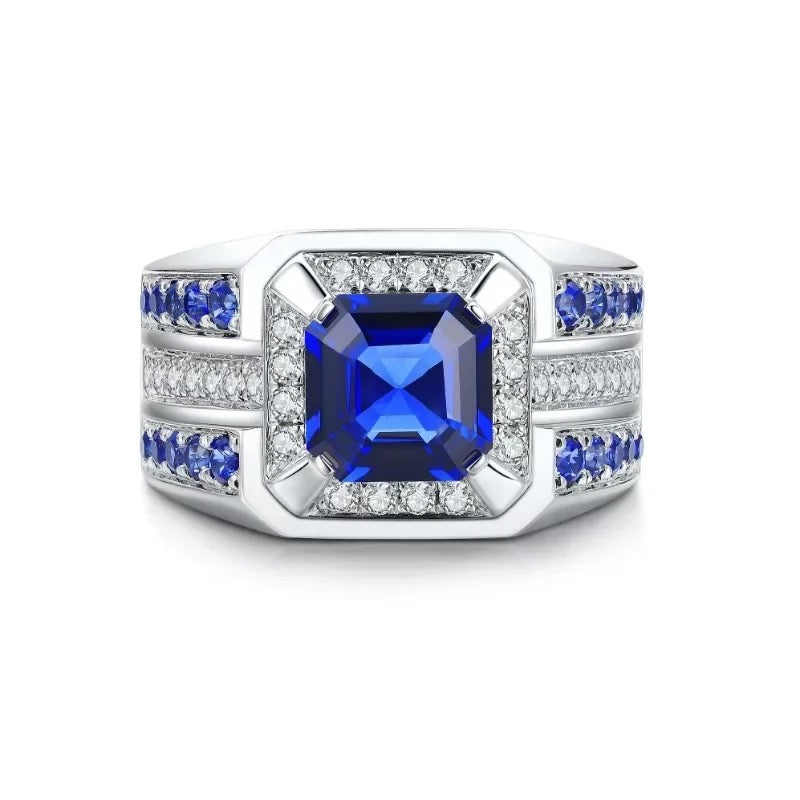
- 8 mm amethyst in 14k gold with the couple’s names and date engraved on the inner band.
- Presented in a recycled wood box with a purple velvet insert and a personalized love note card.
- Option to add a 0.02 ct diamond as an extra detail symbolizing eternity.
Corporate gift ideas
A 5 mm amethyst brooch with a laser‑engraved logo in .925 silver is both elegant and cost‑effective; the high‑resolution laser engraving reproduces fine details of the corporate crest. The piece comes in a magnetic‑closure presentation case and includes an informational sheet explaining amethyst’s symbolism of clarity and strategic vision—perfect for executives and managers.

Amatista Púrpura Natural 3.93ct Octagonal Brillante Brasil — Ver en Gold Shield →
How can I be sure my amethyst is authentic and high‑quality?
At Gold Shield we take the source of every gemstone seriously. That’s why we work only with suppliers certified by the International Gemological Institute (IGI), a globally recognized authority with strict gemological standards. We also have an in‑house lab where a team of specialist gemologists conducts a thorough quality check, verifying exact weight, precise dimensions, and clarity under a 40× optical microscope. This process catches any inclusions, fractures, or surface treatments that could affect the purity of the amethyst.
Is there a certificate of authenticity?
Every piece leaving our facility includes a PDF document that serves as a certificate of authenticity. It lists the unique batch number, the exact origin of the stone (e.g., mines in Chihuahua, Sierra Madre Occidental region) and a UV‑light photo showing the stone’s characteristic fluorescence. The certificate also notes the cutting date, cut style (fancy, brilliant, etc.) and carat weight to two decimal places, ensuring full traceability.
How do you test hardness and density?
Our gem‑lab technicians perform a Mohs hardness test, confirming the stone reaches a rating of 7—the standard for natural amethyst. We also calculate density (about 2.65 g/cm³) using a precision scale and water‑displacement method. These cross‑checks eliminate glass or treated quartz imitators, as any significant density deviation would indicate a different composition.
What determines the price of an amethyst jewelry piece?
The final cost of an amethyst piece depends on more than just the stone’s weight. Key factors include the metal’s karat and purity (10k, 14k, 18k gold or .925 silver), the amethyst’s carat weight, cut quality (fancy cut, emerald cut, etc.), clarity and color intensity, and any custom work requested (engraving, exclusive design, mixed stones). Below is an expanded table showing typical price ranges at Gold Shield, with sample weights and design variations.
| Metal | Purity | Price range (MXN) | Approx. weight | Design example |
|---|---|---|---|---|
| 10k Gold | 41.7 % | $2,500 – $4,500 | 2 – 4 g | Simple ring with a 0.30 ct round amethyst |
| 14k Gold | 58.5 % | $3,500 – $6,000 | 2.5 – 5 g | Pendant with a 0.55 ct fancy‑cut amethyst and filigree detail |
| 18k Gold | 75 % | $5,000 – $9,000 | 3 – 6 g | Necklace with a 1.20 ct oval amethyst and a thick link chain |
| .925 Silver | 92.5 % | $1,800 – $3,200 | 1.5 – 3 g | Bracelet with three 0.25 ct amethysts set in a channel |
Prices are quoted at the time of request and may vary slightly based on metal and stone availability. Gold Shield offers direct‑from‑factory pricing with no middlemen, giving you more value for your investment.

Amatista Púrpura Natural 2.84ct Corte Fancy Cuadrado Uruguay — View on Gold Shield →
How does buying and customizing at Gold Shield work?
The buying process is transparent and fully customized. First, browse our Natural Gemstones collection and pick the amethyst that fits your style, considering cut, color, and weight. Next, choose your preferred metal (10k, 14k, 18k gold or .925 silver) and send design sketches or reference images via WhatsApp to +1 845 622 6479. Our CAD design team creates a realistic 3‑D render, shows the piece from every angle, allows size and stone‑placement tweaks, and sends it back for your approval.
What are the delivery timelines?
After you approve the render, we start production in our in‑house workshop. Standard lead time is 7‑10 business days, covering metal casting, stone setting, and final polishing. For urgent orders we offer an express service with 48‑hour delivery, subject to stone and metal availability; the extra fee is detailed in the quote.
Shipping and warranty details
All shipments within Mexico are FREE, insured against loss or damage, and come with real‑time tracking. For U.S. orders we ship through our subsidiary Gold Shield LLC, handling payment in USD and providing international shipping insurance. Every piece includes an authenticity guarantee covering carat weight and IGI certification; if any manufacturing defect or stone inconsistency is found, we’ll replace it at no cost and you won’t need to return the original.
How do you care for and maintain an amethyst jewelry piece?
Amethyst is relatively hard (7 Mohs) but still needs proper care to keep its vivid violet hue and prevent damage. Avoid hard knocks that can cause internal micro‑fractures, and limit prolonged exposure to direct sunlight or intense UV light, which can fade the color or dull the sparkle.
Everyday cleaning tips
- Rinse the piece under warm running water and apply a small amount of neutral‑pH soap to remove surface dirt.
- Dry with a soft microfiber cloth—avoid paper towels that might scratch the surface.
- For a deeper clean, use a soft‑bristled brush (like a toothbrush) and gently scrub the crevices where the amethyst sits.
- If stains persist, soak the jewelry in warm water with a drop of mild detergent for 5‑10 minutes, then rinse and dry again.
Best storage practices
Store the piece in an individual velvet pouch, separated from other jewelry that could scratch it. If the design features multiple amethysts or mixed gemstones, place each stone in its own compartment to prevent contact. Keep the jewelry in a cool, dark place away from sudden temperature changes that might affect color stability.
How does amethyst compare to other popular gemstones?
When choosing a gemstone for a piece of jewelry, it helps to compare physical properties, look, and price. Amethyst stands out for its characteristic violet color, ranging from light lavender to deep purple, and its budget‑friendly price point. By contrast, moissanite rates 9.25 Mohs and has a diamond‑like brilliance, making it far more scratch‑resistant but also significantly pricier. In our collection you’ll also find Alexandrite Natural, famous for changing color under different lighting, and Spinel Natural, which offers a range of reds and pinks at competitive prices.
Quick comparison
- Amethyst: 7 Mohs, violet color that can be light or deep, low‑to‑mid price, ideal for romantic and elegant designs.
- Moissanite: 9.25 Mohs, diamond‑like sparkle, colorless or slightly yellowish, high price, best for pieces needing maximum durability.
- Garnet: 6.5‑7.5 Mohs, colors ranging from red to orange, price similar to amethyst, great for designs seeking warmth and depth.
Frequently Asked Questions
How can I tell if gold is real?
At Gold Shield every gold piece is stamped with a karat mark (10k, 14k, 18k) engraved on the inside of the ring or pendant, so you can instantly verify its purity. We also run a density test: we weigh the item and compare its weight‑to‑volume ratio with the theoretical density for that karat (for example, 14k ≈ 12.9 g/cm³). If the numbers match, the piece passes verification. A high‑precision testing acid is then applied to a discreet spot; the drop reacts only with base metals, leaves no trace and doesn’t damage the jewelry. Combined with the stamp and density check, this process guarantees that every item we ship is authentic gold of the quality we promise.
How do I know if gold is real or fake?
Real gold won’t scratch when you rub a copper coin over it, and it won’t turn black when exposed to nitric acid—unlike brass or copper knock‑offs, which develop a dark patina. Gold Shield’s jewelers perform two checks before shipping: first, they gently scrape a hidden area with a copper coin to see if the surface resists scratching; second, they place a drop of nitric acid on a concealed spot. If the piece stays unchanged, it’s genuine. We also visually confirm the karat stamp and look for even color, because counterfeit gold often shows irregular yellow‑green hues.
How can I confirm a piece is 14k gold?
Fourteen‑karat gold is 58.5 % pure gold, the rest being alloyed metals that give it strength. When we apply a drop of a 14k‑specific testing acid to a discreet area, a genuine piece will turn a pale green; any other color (yellow, red, or no change) signals a different alloy or a plating. We also measure the piece’s density (≈ 12.9 g/cm³) and compare it to the standard 14k gold density table. A match reinforces the conclusion that the gold is authentic.
How do I know if a chain is made of real gold?
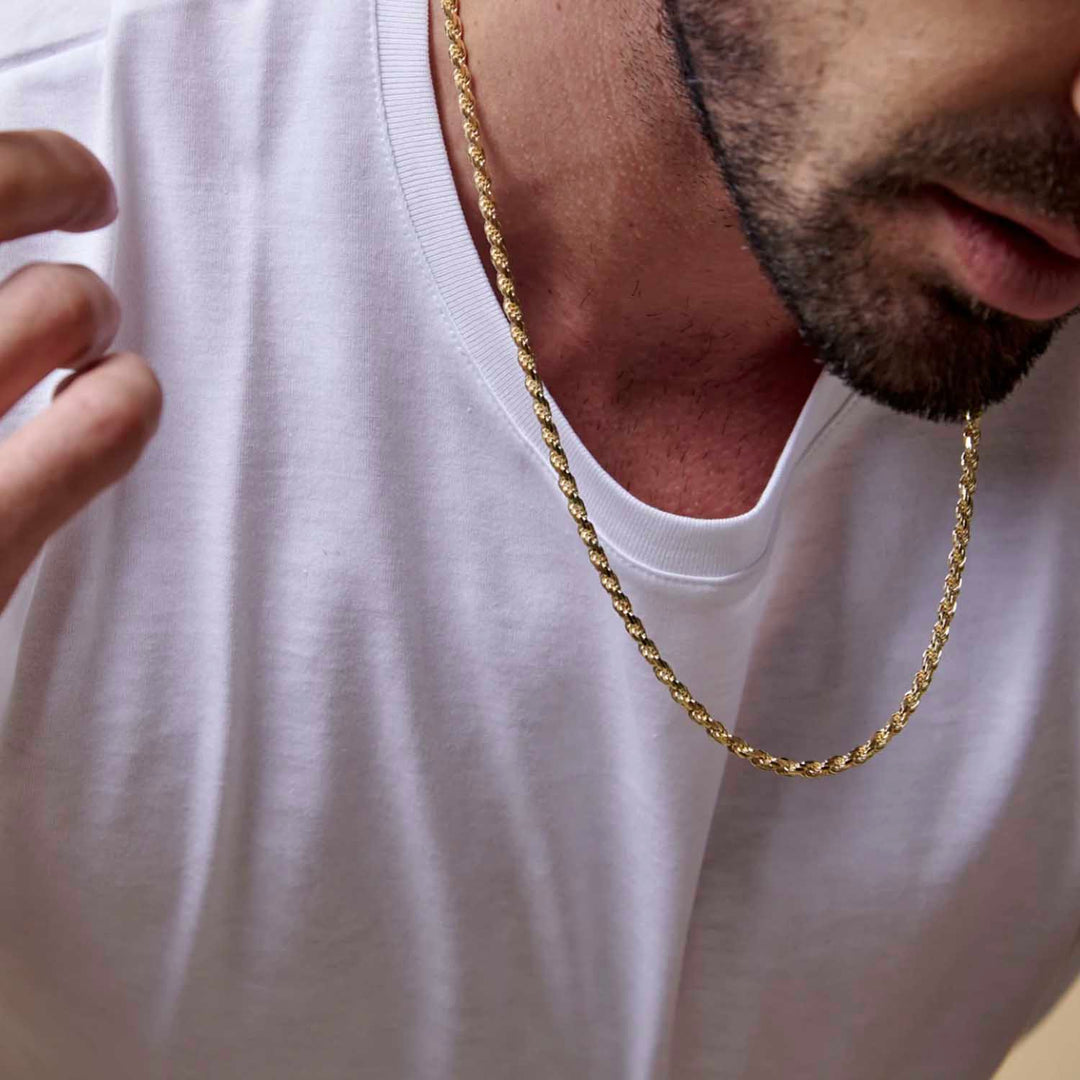
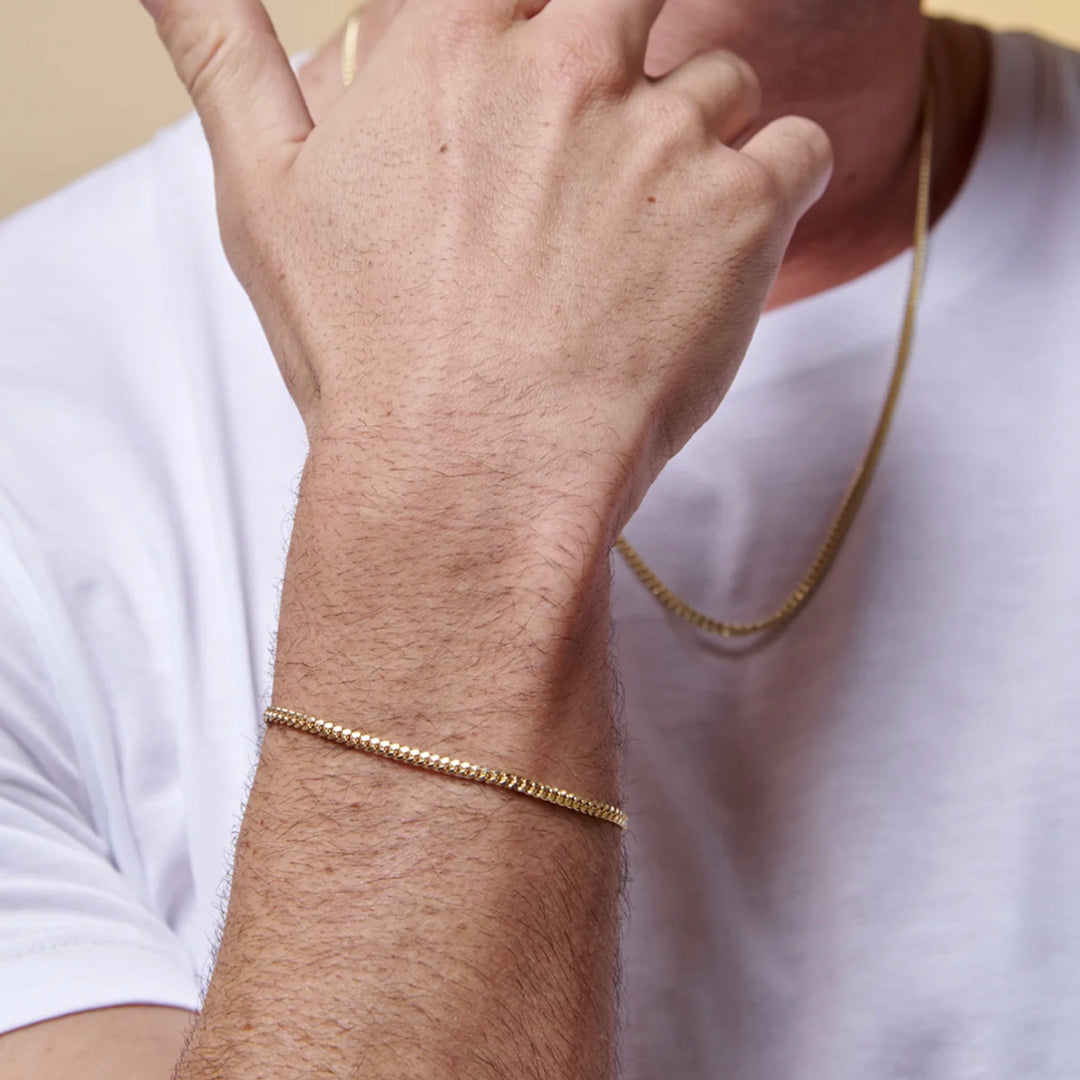
Check the internal stamp on the chain—usually engraved on a link or the clasp—and you’ll see the karat mark (e.g., 14k). Then weigh the chain on a precision scale and estimate its volume (length × cross‑section). Compare the resulting density with the gold density chart (24k ≈ 19.3 g/cm³, 14k ≈ 12.9 g/cm³). Every Gold Shield chain comes with a karat certificate signed by our in‑house lab, detailing purity, net weight and the density test performed, giving you documented proof of authenticity.
Can I test gold at home?
Yes. Use an unglazed ceramic tile or a piece of pottery. Rub the jewelry gently on the surface; genuine gold will leave a bright yellow streak that doesn’t fade. If the mark is gray or absent, the piece likely contains base metals. For a second check, apply a drop of 10k testing acid to a hidden area; a pale‑green change confirms gold, while a red or black reaction means another metal is present.
Does vinegar reveal fake gold?
Pure gold and its common alloys don’t react to vinegar (acetic acid). If the piece looks unchanged after a few minutes in vinegar, that’s a good sign. If you notice yellowing, greenish stains, or slight corrosion, the jewelry contains copper or nickel alloys that react with the acid. After the test, we recommend rinsing the item with distilled water to remove any residue.
How can I spot gold‑filled (laminated) jewelry?
Gold‑filled pieces have a thin layer of gold bonded to a copper or brass core. Lightly file a discreet spot with a fine file or a ceramic knife; if the gold layer flakes off or reveals a reddish color underneath, it’s gold‑filled. Another method is to warm the item gently with a candle—heat will cause a thin layer to oxidize or separate quickly. Gold Shield never uses gold‑filled material; all of our pieces are solid gold for lasting value and durability.
How do I tell if white gold is real or fake?
Real white gold is alloyed with palladium or nickel and then plated with a thin layer of rhodium for that bright silvery look. Perform a magnet test: if the piece is attracted to a magnet, it contains nickel without a rhodium coat and is likely a plated brass imitation. Also, rub the jewelry with a cotton cloth; authentic white gold will retain its shine without losing the rhodium layer, whereas a fake will show wear and a yellowish tint under the plating. All Gold Shield white‑gold items receive a minimum 2 µm rhodium plating, ensuring resistance to tarnish.
Can a magnet help me spot fake gold?
Pure gold and its standard alloys (10k, 14k, 18k) are non‑magnetic. If a piece sticks to a neodymium magnet, it contains ferromagnetic metals like iron or nickel, indicating a counterfeit or an unwanted metal coating. When in doubt, remove a tiny sample from a hidden joint and apply a drop of testing acid. Using both the magnetic check and a chemical test gives a reliable answer. Gold Shield’s technicians run both checks on every item before it’s packaged, ensuring customers receive only genuine gold.
If you’re looking for an authentic amethyst with guaranteed quality and a custom design, reach out via WhatsApp for a no‑obligation quote. At Gold Shield we turn your idea into a piece of Mexican jewelry you can wear with pride.